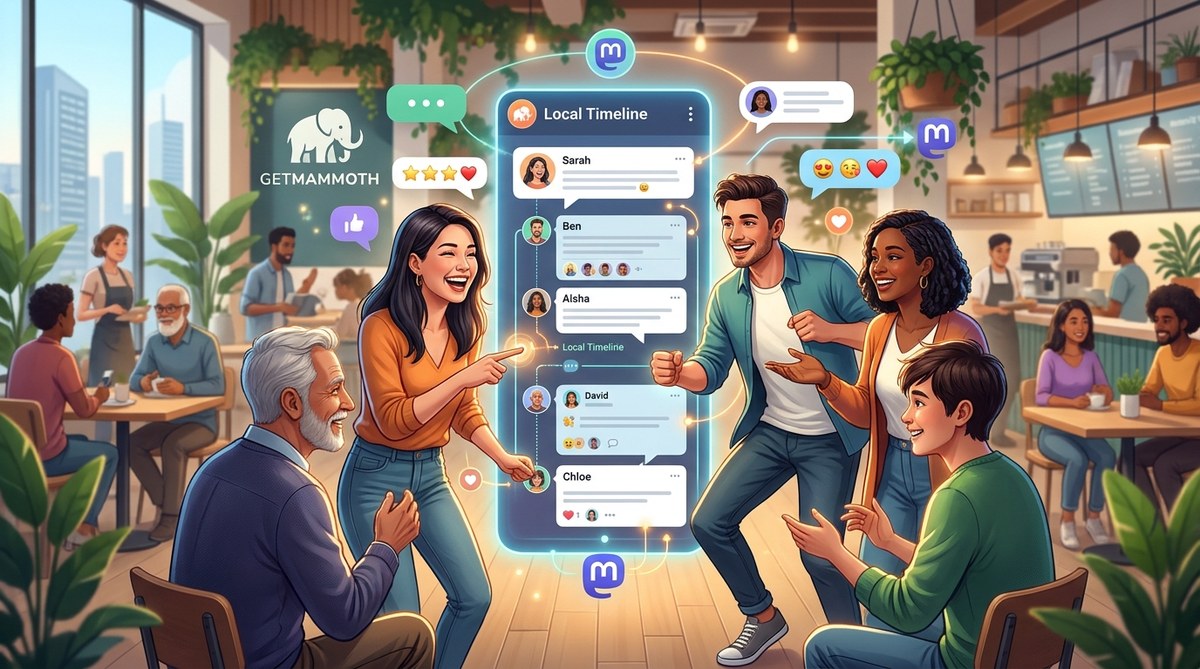
If you have spent any time on Mastodon, you have probably scrolled through your Home feed and the Federated feed. But there is a third timeline hiding in plain sight. It is called the local timeline, and it is the most underrated tool for building genuine community on the fediverse. Most people ignore it. That is a mistake.
The Mastodon local timeline is a feed of public posts from everyone on your specific server. Unlike the algorithm-driven feeds of mainstream platforms, it shows you real people in your digital neighborhood. For community builders, this is gold. It lets you find engaged neighbors, start conversations, and grow a loyal audience without fighting a global algorithm.
What Is the Local Timeline?
When you join a Mastodon instance, you join a community. That server has its own rules, its own culture, and its own local feed. The local timeline shows every public post made by people on that server, in chronological order. There is no algorithm deciding what you see. It is just people talking.
Think of it like a town square. Everyone in your instance can walk through and say hello. You see the same faces every day. You learn who runs the local book club, who posts about woodworking, and who shares the best sunset photos. That is something you cannot get on a platform like X or Instagram, where your feed is curated by an algorithm designed to keep you scrolling, not connecting.
For social media managers and community builders, this changes the game. You are not shouting into a void. You are standing in a room with people who chose to be there. Our guide on https://getmammoth.app/why-mastodon-is-the-social-network-you-should-join-in-2026/ explains why this shift matters for your strategy.
Why the Local Timeline Works for Community Building
The local timeline is not just a feature. It is a philosophy. Here is why it works so well for building real connections.
It Removes the Algorithm Barrier
On mainstream platforms, your posts only reach a fraction of your followers. The algorithm decides who sees your content based on engagement signals. On the Mastodon local timeline, every post from your server appears in order. If you post something, everyone on that server sees it. That is a huge advantage for community builders.
It Creates a Shared Identity
When you post on a local timeline, you are talking to your neighbors. People on the same server share a common purpose. Maybe it is a server for artists, for developers, or for people in a specific city. That shared context makes conversations deeper. You do not have to explain your inside jokes. Everyone already gets it.
It Encourages Reciprocity
Because the local timeline is small and human, people tend to help each other. If someone asks for a recommendation, five people will reply. If you share a win, people celebrate with you. That kind of reciprocity is rare on large platforms. It is natural on a local timeline.
How to Use the Local Timeline for Your Community
Ready to put this into practice? Here is a step-by-step process to turn the local timeline into your community building engine.
-
Choose the right instance. If you want to build a community around a specific topic, join a server that matches that topic. A general server like mastodon.social is fine, but niche servers give you a head start. Check out our post on https://getmammoth.app/how-to-find-your-niche-community-on-mastodon-in-2026/ for help picking the right one.
-
Introduce yourself authentically. Do not drop a link to your newsletter in your first post. Say hello. Tell people what you are interested in. Ask a question. The local timeline rewards genuine human interaction.
-
Engage with others before you promote. Spend a week just replying to people. Boost their posts. Celebrate their work. When you eventually share something of your own, people will already trust you.
-
Post consistently, but not constantly. The local timeline is small. If you post ten times a day, you will annoy people. Two or three thoughtful posts per day is plenty. Share ideas, ask questions, and invite conversation.
-
Use the local timeline to find collaborators. If you see someone posting about a topic you care about, reach out. The local timeline is a networking goldmine. You can find guest writers, co-hosts, and partners without sending a single cold DM.
Common Mistakes to Avoid
Even the best feature can backfire if you use it wrong. Here are the most common mistakes community builders make on the local timeline, and how to fix them.
| Mistake | Why It Hurts | How to Fix It |
|---|---|---|
| Posting only links | Looks like spam. People scroll past. | Add your own thoughts. Ask a question about the link. |
| Ignoring replies | Makes you seem distant. People stop engaging. | Reply to every comment within a few hours. |
| Being too promotional | Erodes trust. People see you as a salesperson. | Follow the 80/20 rule. 80% value, 20% promotion. |
| Posting at the wrong time | Your post gets buried. Fewer people see it. | Pay attention to when your server is most active. Post during those windows. |
| Not reading the room | Your tone clashes with the server culture. | Lurk for a few days. Learn the norms before you post. |
The Local Timeline vs. The Federated Timeline
A lot of new users confuse the local timeline with the federated timeline. They are not the same thing.
- The local timeline shows posts from people on your server only.
- The federated timeline shows public posts from every server connected to the fediverse.
The federated timeline is noisy. It is like standing in the middle of Times Square. The local timeline is like sitting in your favorite coffee shop. For community building, the local timeline is almost always better. It is smaller, quieter, and more human. If you want to understand the bigger picture, our article on https://getmammoth.app/why-federated-timelines-are-the-future-of-social-media/ explains how both feeds fit into the decentralized web.
What the Local Timeline Can Teach You About Your Audience
The local timeline is not just a place to post. It is a research tool. You can learn a lot about your audience by watching what they share.
- What topics get the most replies? That tells you what your community cares about.
- What time of day is most active? That tells you when to post.
- What kind of posts get boosts? That tells you what content resonates.
Use this information to shape your content strategy. If you notice that people love behind-the-scenes posts, share more of those. If they respond to questions, start a weekly Q&A thread. The local timeline gives you feedback that no analytics dashboard can match.
“The local timeline is the closest thing we have to a real town square on the internet. It is where trust is built, one conversation at a time.” – Community manager at a mid-sized Mastodon instance
A Step-by-Step Guide to Starting Your First Local Timeline Campaign
Let us walk through a real example. Say you run a small business that sells handmade pottery. You join a Mastodon instance for artists and makers. Here is your campaign plan.
- Week one: Listen. Spend the first week just reading the local timeline. Note the common topics. Introduce yourself in a post that shows your workspace.
- Week two: Engage. Reply to at least five posts per day. Share your thoughts on other people’s work. Boost three posts that you genuinely love.
- Week three: Share value. Post a short video of your glazing process. Ask the community for feedback on a new design. Offer a tip about clay storage.
- Week four: Invite. Post a thread about your favorite local clay suppliers. Ask others to share theirs. This creates a resource for the whole community.
- Week five: Promote gently. Share a link to your shop, but frame it as a thank you. “Thanks for all the support this month. I added a few new pieces to the shop if anyone wants to see.”
This approach works because it puts community first. By the time you promote, people already feel like they know you. That is the power of the local timeline.
Why 2026 Is the Perfect Time to Focus on Local
The social media landscape in 2026 is fragmented. People are tired of algorithms. They are tired of feeling like products. They want real connection. That is exactly what the Mastodon local timeline offers.
Community builders who invest in the local timeline now are building something that will last. You are not chasing a platform’s algorithm. You are building a home. And homes do not change overnight. Our guide on https://getmammoth.app/how-to-build-a-thriving-community-on-mastodon-in-2026/ goes deeper into long-term strategies.
The Local Timeline Is Your Secret Weapon
Most people on Mastodon ignore the local timeline. They treat it like a noisy public square. But you know better now. The local timeline is where the real community lives. It is where you find the people who will become your biggest fans, your collaborators, and your friends.
Start small. Pick one instance. Spend ten minutes a day on the local timeline. Reply to someone you have never talked to. Share something personal. Watch what happens. You might be surprised by how quickly a community forms around you.
Stop treating Mastodon like a broadcast platform. Start treating it like a neighborhood. The local timeline is your front porch. Sit on it. Say hello. See who sits down next to you.